.png)
What “Natural” Actually Means in Cannabis
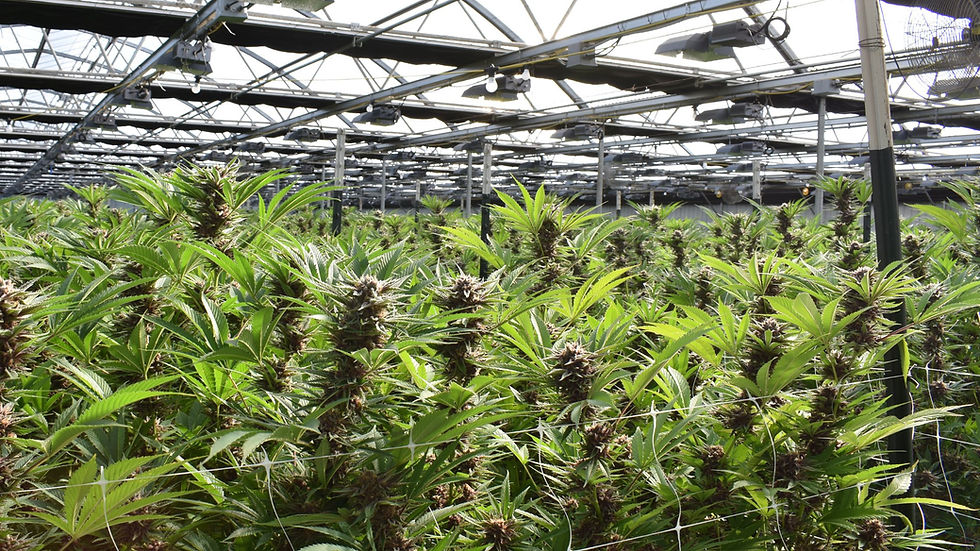
Walk into any dispensary and you’ll see the word natural everywhere. Natural flower. Naturally derived terpenes. Clean, green, organic-adjacent branding that suggests purity without always explaining what that purity actually involves.
The problem isn’t that cannabis can’t be grown responsibly. It’s that “natural” has become a flexible word, one that often sounds reassuring while meaning very little.
I didn’t always question it. Like a lot of consumers, I used to assume that if cannabis came from a plant, it was automatically natural. Over time, and after a few conversations with growers who were far more honest than marketing departments, I realized how incomplete that assumption was.
Why “Organic” Isn’t So Simple in Cannabis
In most industries, organic has a clear definition backed by federal standards. Cannabis doesn’t operate under those same rules. Because cannabis remains illegal at the federal level in the United States, it cannot receive USDA organic certification, even if it’s grown using organic methods.
That creates a gray area. Many cultivators follow organic or regenerative practices but can’t legally call their product organic. Others lean heavily into the aesthetic of organic—earth tones, handwritten labels, leafy language—without adhering to strict growing standards.
Some states offer their own certification programs, and some third-party organizations attempt to fill the gap. But these vary widely in rigor. A “clean” label in one state may not mean the same thing in another.
The takeaway isn’t distrust—it’s curiosity. Asking how something is grown matters more than what it’s called.
What “Natural” Usually Signals—and What It Doesn’t
When brands say “natural,” they’re often trying to communicate absence rather than presence. No synthetic pesticides. No artificial additives. No harsh processing chemicals. Those are good goals, but the label alone doesn’t confirm they were achieved.
Cannabis can be grown using naturally derived inputs that are still harmful if misused. It can also be grown with synthetic nutrients in controlled environments that produce clean, consistent results. Natural does not automatically mean safer, healthier, or better.
What actually matters is how the plant was treated throughout its life cycle—from soil or substrate to harvest, curing, and storage.
Living Soil, Inputs, and Transparency
One of the clearest indicators of thoughtful cultivation is transparency. Growers who are proud of their methods usually enjoy talking about them. Living soil practices, for example, focus on maintaining a healthy ecosystem of microbes that support plant growth naturally. These systems often rely less on bottled nutrients and more on balance.
I once visited a small grow where the cultivator spoke more about compost teas and soil texture than THC percentages. It was the first time I realized how similar cannabis farming could be to food farming. The attention to inputs felt personal, not performative.
That doesn’t mean living soil is the only good method—but it’s an example of intention showing up in practice rather than packaging.
Clean Label Doesn’t Mean Zero Processing
Another misconception is that clean cannabis is untouched cannabis. In reality, all cannabis is processed to some degree. Flower is dried and cured. Concentrates are extracted. Edibles are infused.
The key difference lies in how that processing is done. Are solvents used responsibly and fully purged? Are terpenes reintroduced transparently? Are additives disclosed?
A clean label should tell you what’s inside—not just what’s missing.
How to Read Between the Lines as a Consumer
The most reliable way to understand what you’re consuming isn’t memorizing buzzwords. It’s paying attention to details that don’t fit neatly on the front of the package.
Lab results matter. Not just potency, but pesticide testing and residual solvents. Harvest dates matter. Freshness affects both experience and safety. Consistency matters too—brands that prioritize clean practices tend to be consistent, not flashy.
And sometimes, the most honest products aren’t the loudest ones.
Redefining “Natural” for Yourself
At some point, every cannabis consumer has to decide what natural means to them. For some, it’s environmental sustainability. For others, it’s minimal processing. For others still, it’s simply knowing where their cannabis came from and trusting the people who grew it.
Natural doesn’t have to be a marketing promise. It can be a personal standard.
The cannabis industry is still young, and its language is evolving. As consumers get more informed, the pressure to move beyond vague buzzwords will only increase. That’s a good thing. Because clarity—real clarity—is far more valuable than a word printed in green ink.
And in cannabis, as in most things, what’s real tends to matter more than what sounds good.


.png)
.png)
Comments